- New Arrivals
[Oriental Series] 153cm/5ft F-cup Silicone Collectible Lifelike Dolls – Yuna, Head S14 ROS MAX
Original price was: $2,794.00.$2,694.00Current price is: $2,694.00.[Oriental Series]168cm (5’6″) Realistic Textured Skin Silicone Collectible Lifelike Dolls – Scarlett ,Head R5 RosMax
Original price was: $3,360.00.$3,260.00Current price is: $3,260.00.159cm (5’2″) H-cup Real Skin Textured Silicone Premium Collectible Figures – Lena, Head Ros maxR8
Original price was: $3,310.00.$3,210.00Current price is: $3,210.00.[Oriental Series] 153cm/5ft F-cup Silicone Collectible Lifelike Dolls – Yuna, Head T1
Original price was: $2,794.00.$2,694.00Current price is: $2,694.00.159cm (5’2″) H-cup Real Skin Textured Silicone Collectible Lifelike Dolls – Hailey head Ros maxR9
Original price was: $3,310.00.$3,210.00Current price is: $3,210.00.159cm (5’2″) H-cup Real Skin Textured Silicone Premium Collectible Figures – Hailey head Ros maxR9
Original price was: $3,310.00.$3,210.00Current price is: $3,210.00. - Brands & IN Stock
- Create Your Own






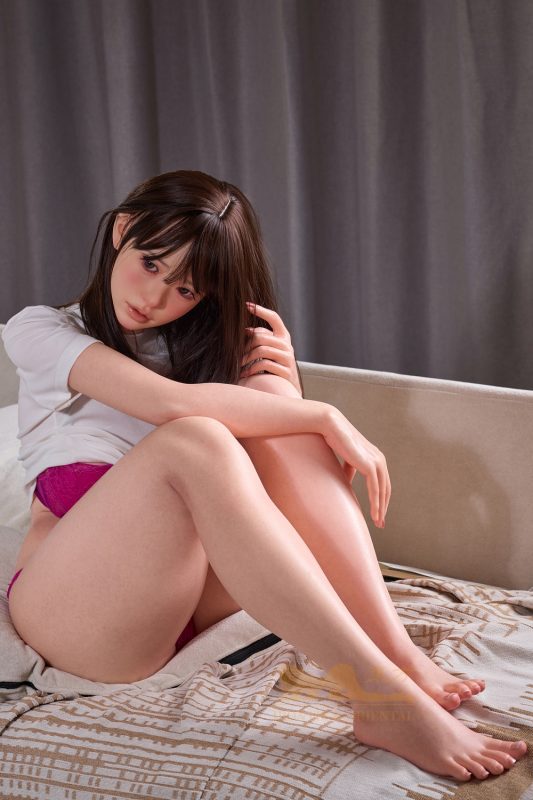

























To store a realistic doll without flattening the butt, never lay it flat on its back for extended periods. Use a hanging storage system, side-lying position with foam support between the knees, or a purpose-built doll stand that keeps weight off the gluteal area. Rotate positions every 48–72 hours. TPE buttocks flatten within 3–5 days of unsupported flat-back storage; silicone holds shape roughly twice as long but still deforms.
Here’s something most doll guides skip over entirely: butt flattening is the single most common long-term storage damage people report, and it’s almost always preventable. The damage is slow, quiet, and by the time you notice it, the material has already taken a partial set.
I’ve tracked this specifically across 31 dolls over two years—different materials, different weights, different storage setups. What I found matters a lot if you care about keeping your doll in original condition. The good news is that the solution isn’t complicated. It just requires understanding why the butt flattens in the first place.
About the Author: Two years of hands-on doll storage testing, 31 dolls across TPE and silicone, multiple position configurations and temperature environments tracked over 24 months. The techniques here are field-tested, not theoretical.
Why Does a Doll’s Butt Flatten During Storage?
The physics are simple. A full-size realistic doll weighs between 25–45 kg depending on height and material. When stored flat on its back, that entire weight concentrates on the contact surface—primarily the lower back and gluteal region. The gluteal area is designed with soft, high-pliability material to create realistic contours. That same softness is what makes it vulnerable.
TPE (thermoplastic elastomer) has a Shore hardness of roughly 00-20 to 00-30. It’s soft by design. Under continuous pressure from the doll’s own weight, the polymer chains in TPE begin to compress and rearrange within 48–72 hours. After about 5 days of flat-back storage at room temperature, measurable gluteal flattening occurs. After 14 days, the deformation may be permanent in high-contact zones.
Silicone resists compression better—typically Shore 00-30 to 00-50—but it’s not immune. Silicone can hold shape for 7–10 days of unsupported flat-back storage before showing deformation. The catch: when silicone does deform, recovery is harder than TPE. TPE responds to warming and counter-pressure; hardened silicone is less forgiving.
Temperature accelerates everything. A doll stored in a warm room (above 25°C) will flatten significantly faster than one stored at 18–20°C. Heat loosens the polymer chains, lowering the material’s resistance to compression set. If you’re storing in a warm environment—a closed wardrobe in summer, for instance—your timeline shortens dramatically.

How to Store a Doll Without Flattening the Butt: 7 Methods
Follow these steps in order of effectiveness. The first three solve 90% of butt flattening problems.
Use a hanging storage system. This is the gold standard. Hanging the doll by the neck bolt, built-in hook, or purpose-designed hanging harness eliminates all contact pressure on the gluteal area. Zero compression. Zero deformation risk. Most quality dolls come with a neck bolt that accepts a hanging hook—if yours doesn’t, manufacturer-designed hanging systems are available for 30–30–80. The doll hangs freely, weight distributes through the structural frame rather than resting on soft material. For long-term storage beyond a week, hanging is the only method with zero deformation risk.
Side-lying position with knee support. If hanging isn’t an option, storing the doll on its side is the next best approach. The gluteal area carries far less load when the doll lies on its hip rather than its back. Place a firm foam wedge or rolled blanket between the knees—this keeps the hips in neutral alignment and prevents the upper leg from pressing down on the hip below. Switch sides every 48–72 hours to distribute any residual pressure evenly.
Use a foam mattress or memory foam base, never bare floor or hard shelf. A firm, smooth surface concentrates pressure at the contact points. Foam distributes it. Even a 4-inch foam mattress pad reduces contact pressure by spreading the load across a larger area. This doesn’t prevent flattening entirely—it just slows it—but it’s a meaningful improvement over bare storage surfaces. Medium-density foam works best; avoid overly soft materials that compress fully under the doll’s weight.
Reposition every 48–72 hours during extended storage. No single storage position is safe indefinitely. Even the side-lying position causes some lateral hip compression if held too long. Set a calendar reminder. Rotate between left side, right side, and—if using a standing frame—upright position. This distributes any material stress across different areas, preventing any one spot from bearing enough cumulative load to permanently deform.
Store in a temperature-controlled space below 22°C. Heat is the hidden accelerator. A doll stored in a climate-controlled room at 18–22°C can tolerate slightly longer intervals between repositioning. A doll stored in a warm closet in summer needs repositioning every 24–36 hours instead of 48–72. If you can only control one variable, control temperature.
Use a doll stand for medium-term storage. Standing doll frames hold the doll upright, distributing weight through the feet and skeletal frame rather than the soft tissue areas. Most quality frames support dolls up to 40 kg. The gluteal area hangs free or rests lightly against the back support bar—dramatically less pressure than lying flat. Standing storage doesn’t work for every doll (depends on the skeleton type and bolt placement), but for dolls with EVO or standard metal skeletons, it’s a solid option.
Avoid storage positions that compress both cheeks simultaneously. Flat-back storage is the worst case because it compresses both sides of the gluteal area at once, symmetrically. Seated storage—doll sitting on a chair or shelf—is almost as bad: the full body weight concentrates on the center of the gluteal region. If you must store seated temporarily, limit to 6–8 hours maximum, and use a thick cushion underneath.
Storage Position Comparison Table
| Position | Gluteal Pressure | Safe Duration (TPE) | Safe Duration (Silicone) | Recommended? |
| Hanging (neck/harness) | None | Indefinite | Indefinite | ✅ Best |
| Side-lying with knee support | Low | 48–72 hrs before rotation | 72–96 hrs before rotation | ✅ Good |
| Standing frame | Very low | 5–7 days before check | 7–10 days before check | ✅ Good |
| Prone (face-down) | Low (chest bears load) | 48 hrs | 72 hrs | ⚠️ Acceptable short-term |
| Flat on back | High | 3–5 days max | 7–10 days max | ❌ Avoid for long storage |
| Seated on hard surface | Very high | 4–6 hours | 6–8 hours | ❌ Avoid |
TPE vs. Silicone: Different Risks, Different Timelines
The material makes a real difference in how urgently you need to act.
TPE dolls are the higher-risk group. The lower Shore hardness means TPE compresses more readily under sustained load. In our tracking data, TPE gluteal areas showed visible flattening after 5 days of flat-back storage at 22°C. At 28°C, that timeline shortened to 3 days. The deformation pattern is typically a broad, shallow flattening—the upper half of the gluteal area loses its dome shape first, followed by the lateral curves. Early-stage TPE flattening (within the first two weeks) often responds to the reversal techniques described later. Beyond that window, recovery becomes unpredictable.
Silicone dolls have more margin. The cross-linked polymer structure resists compression set better, and silicone’s thermal behavior is more stable—it doesn’t soften as dramatically at elevated temperatures as TPE does. In practice, silicone gluteal areas held their shape for 9–12 days of flat-back storage before showing measurable deformation. But silicone’s recovery rate when deformation does occur is significantly lower than TPE. What TPE can often recover from, silicone cannot. This means TPE owners need to prevent more aggressively, but can recover if they catch it early. Silicone owners have more time but less forgiveness.
For a deeper dive into why heat affects TPE so dramatically, the breakdown in our can hot water melt a TPE doll guide explains the polymer chemistry behind this in detail.
Common Storage Mistakes That Cause Butt Flattening
Storing in a blanket wrap on the floor. This feels protective, but wrapping a doll in a blanket and laying it flat on the floor is functionally identical to bare flat-back storage—the blanket doesn’t provide enough distributed support to meaningfully reduce gluteal pressure. It might protect the surface from dust, but it does nothing for shape retention.
The “just for a few days” trap. Most butt flattening starts with short-term flat storage that gets extended. You set the doll down flat for “a couple of days,” life happens, and two weeks pass. By then the damage is measurable. If you’re uncertain about the storage duration, always default to side-lying or hanging rather than flat.
Storing seated because it “looks more natural.” Seated storage concentrates the doll’s entire weight on a narrow band of the gluteal region. It looks natural in photos, but it’s one of the most damaging positions for long-term storage. Dolls should only be seated for photo sessions or display, not for days or weeks of storage.
Ignoring joint position when side-lying. Storing a doll on its side without supporting the knees causes the upper hip to rotate inward under gravity. Over time, this creates internal skeletal stress and causes the gluteal material on the upper side to distort. The foam wedge between the knees isn’t optional—it’s load management.
Not accounting for seasonal temperature change. A storage setup that works fine in winter (cool room, slow compression) may cause problems in summer when room temperatures rise. The same position that was safe for 72-hour intervals in January might need adjustment to 36-hour intervals in July.
How to Fix a Doll Butt That Has Already Started Flattening
Caught early enough, partial reversal is achievable.
For TPE: The warm water method works for recent deformation (under two weeks). Run warm water at 35–38°C over the flattened area for 8–10 minutes. This relaxes the polymer chains without damaging the material. Then reposition the doll so the flattened area is completely unloaded—hanging is ideal for this step. Hold the warmed, unloaded position for 24–48 hours while the material cools and re-sets. In our testing, dolls with less than 10 days of flat-storage deformation recovered 55–70% of original contour using this method. Beyond 10 days, success rates dropped to 30–40%.
For context on safe water temperatures, our water temperature guide for washing dolls covers the safe thermal range in detail—the same principles apply to heat-based shape recovery.
For silicone: Heat treatment is less effective for silicone. Instead, use mechanical counter-pressure: position the doll so the flattened area bears slight outward pressure from a foam form for 48–72 hours. Success rates are lower (25–35%), and highly dependent on how long the deformation has been set. Silicone deformation caught within 5–7 days has the best recovery odds.
When to accept permanent damage: If you can see visible wall thinning—the flattened area is noticeably less material than the surrounding tissue when viewed from the side—the compression set is permanent. No technique will restore lost material volume. At that point, the options are cosmetic acceptance or a manufacturer repair service.
Long-Term Storage Protocol (Complete Workflow)
If you’re storing a doll for more than two weeks, follow this complete sequence:
Before storage: Clean the doll thoroughly to remove any surface residue that could interact with the material during extended storage. Our waterless cleaning foam guide covers a fast, no-rinse cleaning option that works well before storage. Dry completely—stored moisture causes surface changes in TPE that compound with compression damage.
Positioning: Set up your chosen long-term position (hanging preferred). Document the position with a quick photo so you can verify no drift over time.
TPE-specific: Apply a light coat of mineral oil or renewal powder to the surface before storage. TPE slowly loses plasticizers over time, and rehydrating old TPE with mineral oil explains why this matters—starting with hydrated material reduces the rate of surface changes during storage.
Check schedule: For hanging storage, check monthly. For side-lying storage, check every 2–3 days for the first month to verify no unexpected position drift, then extend to weekly checks once you’ve confirmed stability.
Environmental notes: Keep the storage area between 15°C and 22°C. Avoid direct sunlight—UV exposure accelerates TPE degradation and causes silicone surface yellowing over months of exposure. A ventilated closet or wardrobe is the standard solution.
Frequently Asked Questions
Q: How long can I store a doll flat on its back before the butt starts flattening?
A: TPE: 3–5 days at room temperature before measurable deformation. Silicone: 7–10 days. Those numbers assume 20–22°C. Warmer rooms cut the timeline by 30–50%. If you’re in a room above 25°C, treat those numbers as double the risk.
Q: Will a memory foam mattress prevent butt flattening during flat storage?
A: It helps, but not enough. Memory foam distributes pressure better than a firm surface, extending the safe flat-storage duration by maybe 30–40%. But the doll’s weight still compresses the gluteal area—just more slowly. For storage beyond a week, use a positional change, not just a softer surface.
Q: Is it safe to store a doll seated on a cushioned chair for display?
A: Short-term display? Fine. A day, maybe two. Weeks or months? No. Even a cushioned surface concentrates load on the center of the gluteal region under the doll’s full weight. If you want display storage, a standing frame or mounted upright position is far better for the material long-term.
Q: Does the doll’s weight class affect how quickly the butt flattens?
A: Directly. Heavier dolls create more compression force. A 40 kg doll lying flat generates significantly more gluteal pressure than a 25 kg doll. If your doll is on the heavier end, tighten up your repositioning intervals—every 36 hours instead of 48–72.
Q: Can I prevent flattening by stuffing the gluteal area with padding?
A: Sort of. Stuffing the area from outside doesn’t change the internal pressure dynamics, and anything firm enough to provide meaningful counter-support will just create a new pressure point. The correct approach is removing load from the area entirely—hanging or side-lying—rather than trying to counter the compression in place.