- New Arrivals
[Oriental Series] 153cm/5ft F-cup Silicone Collectible Lifelike Dolls – Yuna, Head S14 ROS MAX
Original price was: $2,794.00.$2,694.00Current price is: $2,694.00.[Oriental Series]168cm (5’6″) Realistic Textured Skin Silicone Collectible Lifelike Dolls – Scarlett ,Head R5 RosMax
Original price was: $3,360.00.$3,260.00Current price is: $3,260.00.159cm (5’2″) H-cup Real Skin Textured Silicone Premium Collectible Figures – Lena, Head Ros maxR8
Original price was: $3,310.00.$3,210.00Current price is: $3,210.00.[Oriental Series] 153cm/5ft F-cup Silicone Collectible Lifelike Dolls – Yuna, Head T1
Original price was: $2,794.00.$2,694.00Current price is: $2,694.00.159cm (5’2″) H-cup Real Skin Textured Silicone Collectible Lifelike Dolls – Hailey head Ros maxR9
Original price was: $3,310.00.$3,210.00Current price is: $3,210.00.159cm (5’2″) H-cup Real Skin Textured Silicone Premium Collectible Figures – Hailey head Ros maxR9
Original price was: $3,310.00.$3,210.00Current price is: $3,210.00. - Brands & IN Stock
- Create Your Own
































Painting TPE doll lips requires water-based acrylic paint, a fine liner brush (#000 or #00), and two layers of matte sealer. The critical step most people skip is outlining first with a pale base color — this prevents paint from bleeding into the surrounding TPE. Use a stippling motion for the lip body (not brush strokes), build 2–3 semi-opaque layers, and seal with extra care because the mouth area flexes constantly. Total time: about 60 minutes for a full lip repaint.
Why Lip Paint Is Harder Than Blush
If you’ve already read our guide on reapplying blush to a TPE doll, you know the basics — water-based acrylic, stippling, matte sealer. Lip painting uses the same materials. But the technique is fundamentally different, and here’s why.
Three Problems Unique to Lips
1. Defined edges. Blush is supposed to fade into the skin. Lips have a hard border. If your hand shakes for half a second, everyone sees it. There’s no “blend it out” option for the vermilion border.
2. Constant flexing. The mouth area is the most mobile part of a doll’s face. Every time the jaw moves, the lips stretch and compress. Paint that’s rigid — or sealed poorly — cracks at the corners within days.
3. Higher saturation. Blush is translucent by design. Lips need opacity. You’re going from bare TPE to full-coverage color in a small, high-visibility area. The margin for “slightly off” is basically zero.
The good news: once you understand the technique, lip painting is actually faster than blush. About 60 minutes for a full repaint, compared to 90+ minutes for a multi-layer blush application. The precision demands more focus, but the process is shorter.
What You’ll Need
Most of this overlaps with your blush kit. A few items are lip-specific.
| Tool | Purpose | Spec |
| Water-based acrylic paint | Lip color + base | 3 shades: pale base, main lip, highlight |
| Liner brush #000 | Outlining the lip border | Synthetic, 0.5–1mm tip |
| Flat brush #2 | Filling lip body | Synthetic, 3–4mm wide |
| Stippling brush (small) | Blending lip center | 4–6mm round |
| Distilled water | Diluting paint | Not tap water |
| Paint palette | Mixing | Ceramic or plastic |
| Cotton swabs (dozens) | Fixing mistakes | Pointed tip preferred |
| Microfiber cloths | Surface prep | Lint-free |
| Cornstarch | Powder base + setting | Fine, pure |
| Matte acrylic sealer | Sealant | Krylon Matte or similar |
| Magnifying lamp (optional) | Precision | 3x–5x magnification |
The liner brush is non-negotiable. Don’t try to outline with a flat brush or a cotton swab. The tip needs to be finer than the line you’re painting — and the vermilion border is about 0.5mm wide. A #000 liner brush gives you control at that scale.
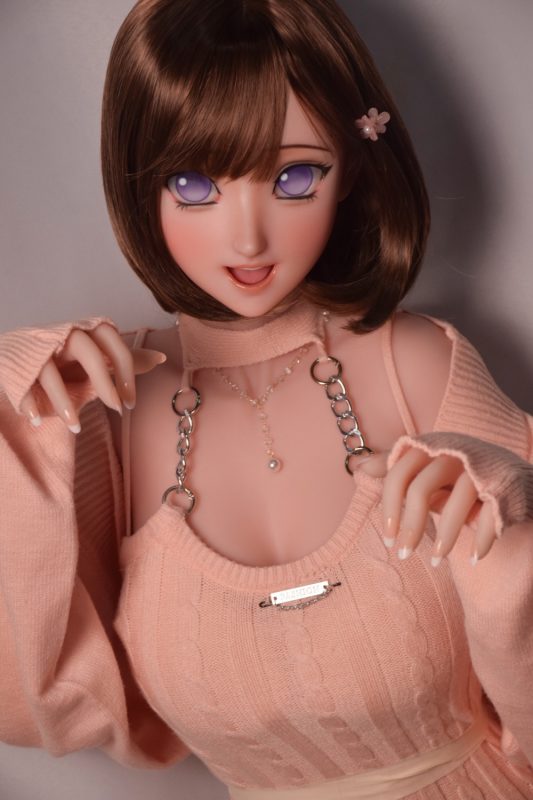
Lip Anatomy for Painters
Before touching paint to surface, know what you’re outlining. The human lip (and a well-sculpted doll lip) has distinct zones:
- Vermilion border: The sharp edge where lip meets skin. This is your outline line.
- Cupid’s bow: The V-shaped dip on the upper lip. Two peaks and a center valley.
- Tubercle: The central fullness of the upper lip. This is where highlight goes.
- Oral commissures: The corners. Paint tends to pool here — go light.
- Lower lip body: The full, rounded surface. Takes the most paint.
On a doll, the sculpt normally defines these features. You’re painting within the sculpted boundaries, not creating them from scratch. If the doll has no lip sculpt — just a smooth face — you’re freehanding the shape, which is much harder. For that scenario, draw the outline with a water-soluble pencil first, then paint over it.
Surface Prep
Same four steps as blush prep, but with extra attention to the mouth area.
Step 1: Deep Clean
The mouth area collects more oil and powder than anywhere else on the face. Use a microfiber cloth dampened with distilled water. Clean the lips, the skin 5mm beyond the vermilion border, and the corners. Work gently — lip TPE is thin and stretches easily.
Step 2: Dry Completely
Wait 5 minutes for air drying. Buff with a dry cloth. The surface must be matte. Any residual oil will cause the paint to bead up instead of grabbing.
Step 3: Powder the Base
Light dusting of cornstarch. Focus on the lip surface itself — not the surrounding skin. Use a small brush for precision. Buff for 30 seconds.
Step 4: Tap Off Excess
A clean brush removes loose powder. The lips should look matte and slightly whitened.
If you need to remove old, cracked lip paint before starting fresh, see our guide on what removes TPE factory makeup. Use the diluted IPA method (under 50%) and only on the lip area — don’t let it spread to the cheeks.
Color Selection
Lip color communicates more than blush. A wrong blush tone looks slightly off. A wrong lip color looks completely wrong.
Skin Tone Matching Guide
| Doll Skin Tone | Recommended Lip Color | Second Option |
| Fair / Porcelain | Soft rose, dusty pink | Berry mauve (for bold look) |
| Light / Beige | Rosewood, coral pink | Warm nude |
| Medium / Tan | Brick red, terracotta | Deep rose |
| Dark / Ebony | Berry, wine, plum | Deep burgundy |
The safest universal lip color for TPE dolls is rosewood — it reads as natural on 80% of skin tones. FolkArt calls it “Rosewood.” Apple Barrel calls it “Clay.” Both are $2–3 at any craft store.
The Two-Color Rule
You need at least two shades for realistic lips:
- Base color: Your chosen lip tone, slightly lighter than the final result
- Highlight: A lighter version of the base, for the cupid’s bow and center fullness
If you want to get fancy, add a third: a slightly darker shade for the corners and lip line definition. But two is enough for natural-looking results.
Step-by-Step Painting Technique
Step 1: Mix the Base Color
Dilute your chosen lip color with distilled water at a 1:1 ratio — same as blush. But for lips, you want slightly more opacity. Add one extra drop of paint to the mix so it’s just barely thicker than the blush consistency. Think “whole milk” rather than “skim milk.”
Step 2: Outline the Vermilion Border
This is the make-or-break step.
Load your #000 liner brush with the base color. Not too much — the brush tip should be damp, not dripping. Starting at the center of the cupid’s bow, paint the outline of the upper lip. Move outward toward the corners. One smooth, continuous motion per section.
Then outline the lower lip. Start at one corner, follow the edge to the other corner.
The outline should be as thin as possible — about 0.5mm. This is just a guide line. The color will be filled in later.
If your hand is shaky: brace your painting hand against the hand holding the doll. Three points of contact — doll, holding hand, painting hand. This eliminates micro-tremors.
Step 3: Paint the Base Barrier
Here’s the trick that prevents bleeding: immediately after outlining, fill the outside of the outline — the skin area adjacent to the vermilion border — with a pale, skin-toned acrylic wash temporarily. This creates a physical barrier. If your lip color bleeds, it hits the barrier and stops.
This step takes 30 seconds and prevents 90% of the “paint bled into the skin” problems. Remove the barrier with a damp cotton swab once the lip paint is dry.
Step 4: Fill the Lip Body
Switch to your #2 flat brush. Fill the outlined area with the base color using small, controlled strokes. Work from the center outward on each lip. The center should have slightly more pigment. The corners should have slightly less — paint pools in corners and looks darker naturally.
For the upper lip, pay attention to the cupid’s bow. Each “peak” of the bow should have clean color. The valley between them should be slightly softer.
Step 5: Build Depth with Layer 2
Let the first layer dry (3 minutes). Apply a second layer of the same base color to the center of both lips, blending outward. This creates natural depth — the center of the lip is fuller and catches more light, so it should read as more saturated.
Step 6: Add Highlight
Mix your highlight color — base color plus a tiny amount of white or pearl, diluted slightly more (1:1.5 paint to water). With the stippling brush, apply a small dot of highlight to:
- The two peaks of the cupid’s bow
- The center of the lower lip (the fullest part)
- A tiny dot at the tubercle (center fullness of upper lip)
Stipple gently. You’re adding a suggestion of dimension, not painting a white stripe.
Step 7: Dry and Assess
Let everything dry for 10 minutes. Look at the lips under daylight. Walk away for 5 minutes and look again. Fresh eyes catch mistakes.
Common issues at this stage:
- Asymmetrical cupid’s bow → repaint with liner brush
- Uneven color → one more light layer over the lighter side
- Bleeding at corners → dab with damp cotton swab, repaint border
Sealing the Lips (Different from Blush)
Lips need stronger sealing than blush. The mouth flexes, and flexing breaks brittle sealant.
Sealant Layering for High-Flex Zones
| Step | Product | Wait Time |
| Powder set | Cornstarch | 5 min |
| Seal coat 1 | Matte acrylic spray (12″ distance) | 15 min |
| Seal coat 2 | Matte acrylic spray | 15 min |
| Seal coat 3 | Matte acrylic spray | 30 min |
| Final powder | Cornstarch | 5 min |
Three sealant coats instead of two — that’s the lip difference. The extra coat adds flexibility. When the mouth moves, three thin layers flex together instead of one thick layer cracking.
Spray from 12–14 inches. Half-second passes. You want a mist, not a wet coat.
After the final sealant coat cures for 30 minutes, apply one last dusting of cornstarch with a small brush and buff gently. This restores the matte finish and prevents any residual tackiness.
Fixing Common Lip Painting Mistakes
Paint Bled Outside the Outline
While wet: Immediately roll a dry cotton swab over the bleed. The dry swab absorbs wet paint. Don’t rub — rolling lifts the paint without smearing.
After drying: Dampen a pointed cotton swab with distilled water. Carefully trace the edge of the bleed and lift the paint. This is slow, precise work. A magnifying lamp helps.
Uneven Cupid’s Bow
The cupid’s bow is the hardest part to get right. If the two peaks aren’t symmetrical, repaint the offending side. Don’t try to correct – just go over it with fresh paint. The old paint underneath adds density and actually helps the correction look intentional.
Lip Color Too Dark
Apply a very thin wash of the pale barrier color over the entire lip. 1:4 paint to water — barely tinted. This mutes the color without covering it. Re-seal after.
Paint Flaking at the Corners
The corners flex most during mouth movement. If paint flakes there, the sealant was too thin or the paint was too thick at the corner. Sand the flaking area gently with a clean, dry microfiber cloth, re-powder, repaint with extremely thin paint (1:2 dilution), and re-seal with four coats instead of three.
Paint Won’t Adhere at All
If the paint beads up on the surface, there’s residual oil on the TPE. Strip the area — wipe with a microfiber cloth dampened with diluted isopropyl alcohol (under 50%), then immediately re-powder and repaint. The alcohol removes the oil barrier; the powder creates a new grip surface.
How to Clean Around Painted Lips
Once the lips are painted and sealed, you need to clean the rest of the face without disturbing your work. The lip area is the highest-risk zone for accidental paint contact during cleaning.
Our full guide on how to clean doll makeup without removing it covers this in detail. The short version:
- Use a cotton swab dampened with distilled water for the skin immediately around the lips
- Roll the swab, don’t drag
- Keep the swab 2–3mm away from the vermilion border
- Dry the area immediately
Never use any cleaning product on or near painted lips. The sealant is durable against water and light contact, but surfactants, alcohol, and oils will break it down.
How Long Will Painted Lips Last?
| Usage Pattern | Expected Duration |
| Display only | 12–18 months |
| Light handling, occasional photos | 6–10 months |
| Regular handling | 3–5 months |
| Frequent mouth movement (talking poses, etc.) | 1–3 months |
Lips degrade faster than blush because of the flex factor. The sealant protects the pigment, but repeated stretching eventually creates micro-fractures in the sealant layer. Once moisture gets through, the paint underneath breaks down.
For longest life: minimize mouth movement. Store the doll with the mouth closed. Re-powder the lip area monthly to maintain the protective powder layer over the sealant.
FAQ
Q: Can I use lipstick or lip gloss instead of paint?
A: No. Human lip products contain oils, waxes, and emollients that never dry on TPE. They smear on contact, transfer to everything, and some formulations contain ingredients that degrade TPE plasticizer. The look is also wrong — human lip makeup has a wet or glossy finish, while painted and sealed TPE lips have a natural matte skin texture that looks far more realistic on a doll.
Q: Should the upper lip be darker or lighter than the lower lip?
A: The lower lip should be slightly more saturated and about 10% fuller in color coverage. On human faces, the lower lip catches more light and reads as slightly brighter and larger. On a doll, you simulate this by applying your second layer more heavily to the lower lip. The upper lip stays closer to the single-layer base, with highlight only at the cupid’s bow.
Q: What if my doll has an open mouth? How do I paint the inside?
A: Painting the oral cavity is a separate skill. The interior (gums, tongue) needs a different approach — darker, cooler reds for depth. Paint the lips first (the outer surface), seal them, then paint the interior separately. If you paint both at once, the moisture from the interior paint will bleed into the lip paint. For open-mouth dolls, leave a 1mm gap between the lip edge and the interior paint, and fill it with a shadow color to create natural depth.
Q: Can I mix my own custom lip color from primary acrylics?
A: Yes, and it’s often better than buying a pre-mixed color. Start with red as your base. Add yellow to warm it (moves it toward coral/terracotta). Add blue to cool it (moves it toward berry/plum). Add white to mute and lighten. For most natural lips, you want a muted, slightly desaturated red — pure red looks like stage makeup. The ratio for a universal rosewood: 2 parts red + 1 part yellow + 0.5 parts blue + 1 part white. Mix on your palette and test on paper before touching the doll.
Q: Can I paint the lips without removing the factory lip color?
A: Yes, as long as the factory color is intact (not cracked or peeling). Clean, powder, and paint directly over it. The factory paint acts as a primer. If the original color is much darker than your new color, you may need an extra layer of pale base wash first to neutralize the darkness — same 1:4 paint to water dilution, one layer, dry, then paint your new color on top.