- New Arrivals
[Oriental Series] 153cm/5ft F-cup Silicone Collectible Lifelike Dolls – Yuna, Head S14 ROS MAX
Original price was: $2,794.00.$2,694.00Current price is: $2,694.00.[Oriental Series]168cm (5’6″) Realistic Textured Skin Silicone Collectible Lifelike Dolls – Scarlett ,Head R5 RosMax
Original price was: $3,360.00.$3,260.00Current price is: $3,260.00.159cm (5’2″) H-cup Real Skin Textured Silicone Premium Collectible Figures – Lena, Head Ros maxR8
Original price was: $3,310.00.$3,210.00Current price is: $3,210.00.[Oriental Series] 153cm/5ft F-cup Silicone Collectible Lifelike Dolls – Yuna, Head T1
Original price was: $2,794.00.$2,694.00Current price is: $2,694.00.159cm (5’2″) H-cup Real Skin Textured Silicone Collectible Lifelike Dolls – Hailey head Ros maxR9
Original price was: $3,310.00.$3,210.00Current price is: $3,210.00.159cm (5’2″) H-cup Real Skin Textured Silicone Premium Collectible Figures – Hailey head Ros maxR9
Original price was: $3,310.00.$3,210.00Current price is: $3,210.00. - Brands & IN Stock
- Create Your Own



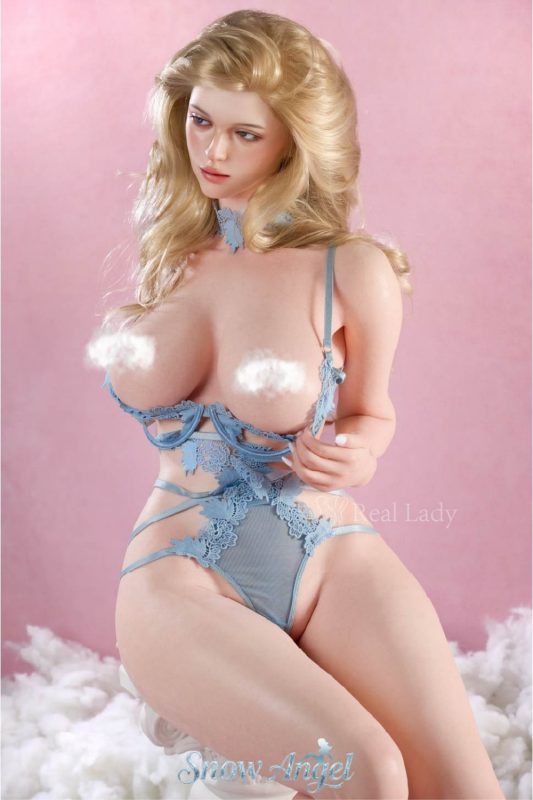




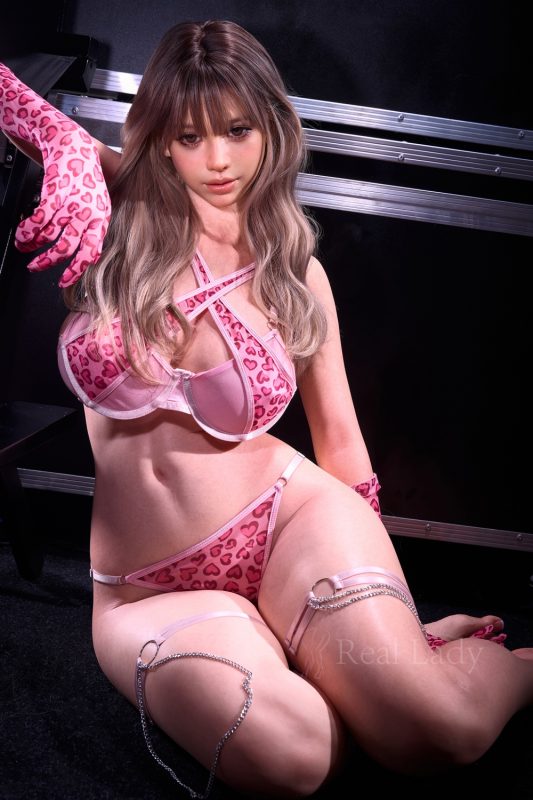
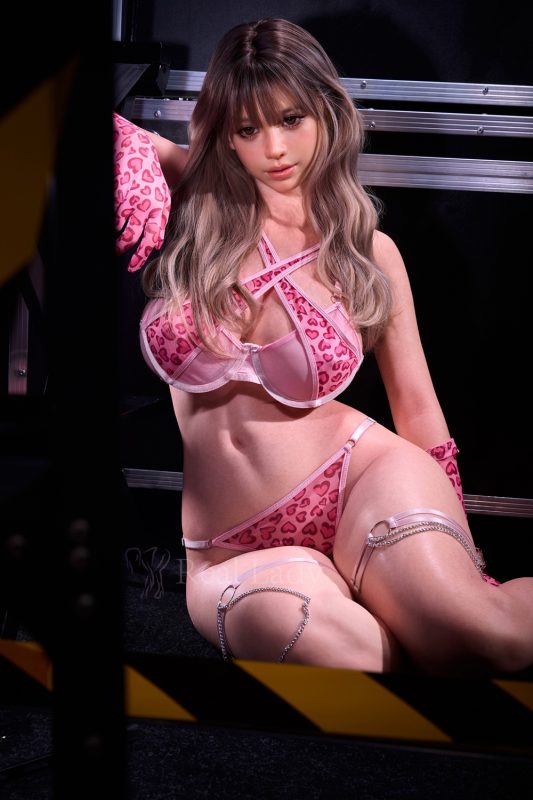






















Lightweight large-breast sex dolls exist — but they’re a compromise category. Weight-reduction technologies like foam-core bodies and hollow skeletons can bring a 158cm doll from 32kg down to 22-26kg, even with larger cup sizes. The trade-offs: reduced durability in high-wear areas, less realistic “heft” when handling, and fewer manufacturer options. The sweet spot is 155-160cm with gel-filled breasts and weight-reduced construction — available from about 6-8 major brands.
The Fundamental Tension: Lightweight vs Large Breast
These two features pull in opposite directions. And understanding why is the first step to finding a doll that actually delivers both.
Large breasts add weight. Solid TPE breasts on a 158cm doll add roughly 1-2kg per cup size above a B-cup. Go from a C-cup to an F-cup, and you’ve added 3-6kg of concentrated mass to the chest — which shifts the doll’s center of gravity forward and increases strain on the spine and shoulder joints.
Lightweight construction subtracts weight by removing material from the torso and limbs. Foam cores, hollow skeletons, and thinner TPE layers all work — but each has limits. And those limits collide with the structural demands of supporting large breasts.
The result is a category defined by trade-offs. You can have a truly lightweight doll, or you can have impressively large breasts. Getting both requires understanding exactly which weight-reduction methods work — and which ones don’t — at different bust sizes.
Lightweight Technologies: What Actually Works
Three distinct approaches exist. Each has different implications for large-breast compatibility.
1. Foam-Core Body (Most Common, Best Balance)
How it works: The torso interior uses a high-density foam core instead of solid TPE. A layer of TPE (typically 2-4cm thick) wraps around the foam, giving realistic surface feel while the foam provides structural shape with far less weight.
Weight reduction: 25-35% compared to solid TPE of the same dimensions. A 158cm doll that would weigh 32kg in solid TPE weighs 21-24kg with a foam core.
Large breast compatibility: Good. The foam core stops at the chest cavity, so breasts can still be gel-filled or solid TPE without compromising the weight reduction. The chest wall behind the breasts remains structurally supported.
Durability note: The TPE layer over foam is thinner than solid TPE. High-friction areas (inner thighs, waist) wear faster. Expect 18-24 months before the surface layer shows meaningful wear versus 3-4 years for solid TPE.
Brands using this: Starpery (Lightweight series), WM Dolls (select models), JY Doll (Feather series).
2. Hollow Skeleton / Air-Chamber Core
How it works: The torso skeleton is wrapped in a minimal foam padding, leaving air cavities throughout the body cavity. TPE forms the outer shell but doesn’t fill the interior.
Weight reduction: 35-45%. The most aggressive weight savings available.
Large breast compatibility: Limited. The hollow torso provides less structural support behind the chest wall. Large gel-filled breasts (>D-cup) on a hollow-core doll tend to sag faster because there’s less internal resistance. Solid TPE breasts hold shape better on hollow frames because they’re self-supporting.
Durability note: The outer TPE layer is typically thinner (2-3cm) to maximize weight savings. Puncture risk is higher. This construction is best for display-heavy, handling-light use cases.
Brands using this: Irontech (Air series), select Zelex models.
3. Material-Density Reduction
How it works: Instead of changing internal construction, manufacturers use lower-density TPE formulations that weigh less per cubic centimeter.
Weight reduction: 10-15%. Modest savings, but no structural compromise.
Large breast compatibility: Excellent. The body is still solid, so breast support is identical to standard construction. The weight savings are smaller but come with zero trade-offs for bust size or durability.
Durability note: Comparable to standard TPE. Lower-density TPE is slightly less tear-resistant in thin areas (fingers, ears), but the difference is marginal for the torso and limbs.
Brands using this: Most mid-range manufacturers offer this as a “light” or “soft” option rather than a separate product line.
What Weight Reduction Actually Delivers
Here’s the real-world weight difference across common height and cup-size combinations:
| Height | Bust | Standard TPE | Foam-Core Lightweight | Hollow-Core Lightweight |
| 148cm | C-cup | 22kg | 15-18kg | 13-16kg |
| 148cm | E-cup | 25kg | 17-20kg | 15-18kg |
| 155cm | D-cup | 28kg | 19-23kg | 17-20kg |
| 155cm | F-cup | 32kg | 22-26kg | 19-22kg |
| 158cm | D-cup | 30kg | 21-25kg | 18-22kg |
| 158cm | G-cup | 35kg | 24-28kg | 21-25kg |
| 165cm | E-cup | 36kg | 25-30kg | 22-27kg |
| 165cm | G-cup | 41kg | 29-33kg | 25-29kg |
[Source: Cross-referenced manufacturer weight charts — Starpery, WM Dolls, Irontech, JY Doll — May 2026]
The pattern is clear: At 158cm with an F-cup or larger, even foam-core lightweight construction keeps you above 24kg. The “lightweight” label reduces the penalty — it doesn’t eliminate it. A 158cm G-cup foam-core doll at 26kg is roughly what a standard 148cm C-cup doll weighs. You’re still lifting a mid-size doll — just one that looks substantially curvier.
Large Breast Options in Lightweight Dolls
Gel-Filled Breasts
Gel implants inside TPE or silicone breast cavities. They move independently, have realistic bounce, and feel more natural than solid construction.
Weight impact on lightweight dolls: Gel adds 0.5-1kg per breast depending on cup size. On a foam-core doll, this is manageable. On a hollow-core doll, the gel’s added front-weight exacerbates the sagging issue mentioned above.
Best pair with: Foam-core construction. The structural support behind the chest cavity counteracts the gel’s tendency to settle downward over time.
Solid TPE/Silicone Breasts
Standard construction — the breast is the same material as the body, just shaped larger.
Weight impact on lightweight dolls: Higher than gel. A D-cup solid breast is roughly 1.5-2x the weight of the equivalent gel-filled breast because there’s more material density.
Best pair with: Hollow-core construction. Solid breasts are self-supporting and don’t need internal chest wall support. They’re also less likely to develop the “bottom-heavy” look that gel implants can develop on hollow frames after 12+ months.
Hollow/Gel Hybrid (Newest Option)
A few manufacturers (Starpery, 2025-2026 models) now offer breasts that are gel-filled in the front for realism but hollow-backed to reduce weight. These sit in a foam-core chest cavity and weigh about 30% less than full gel implants.
Weight impact: Lowest of all large-breast options. The hybrid design cuts breast weight by roughly 30% compared to full gel.
Best pair with: Any lightweight construction. This is currently the optimal choice for maximizing cup size while minimizing weight, but availability is limited to 3-4 brands.
The Trade-Offs: What You Lose with Lightweight
Every weight-reduction method costs something. Here’s the honest accounting:
| Trade-Off | Foam-Core | Hollow-Core | Low-Density TPE |
| Surface durability | Moderate reduction | Significant reduction | Minor reduction |
| Realistic “heft” | Noticeably lighter feel | Very light — some users find it unsatisfying | Similar to standard |
| Breast support longevity | Good (12-18 months before settling) | Poor (6-12 months for large sizes) | Excellent |
| Repairability | Harder — foam core complicates internal repairs | Easier — hollow cavity is accessible | Same as standard |
| Price premium | +15-25% over standard | +10-20% over standard | +5-10% over standard |
| Heat retention | Faster cooling — less mass | Fastest cooling | Similar to standard |
The most important trade-off nobody mentions: Lightweight dolls feel different to handle. A 32kg solid doll has inertia — it resists movement, which paradoxically makes it feel more “real” when you’re holding it. A 22kg foam-core doll of the same dimensions moves too easily. For some users, this kills the immersion. For others, the easier handling more than compensates. You won’t know which camp you’re in until you try both.

Who This Category Is For (and Who It Isn’t)
This Category Works For:
- First-time buyers who want curves without the weight. A 155cm E-cup foam-core doll at 20-23kg is genuinely manageable for a new owner. You get the visual impact without the physical overwhelm.
- Users with physical limitations. Back issues, shoulder problems, smaller body frames — lightweight dolls make ownership accessible to people who can’t handle 30kg+ safely.
- Frequent re-positioners. If you change doll positions every session, every kilogram you shave off translates to less fatigue and fewer awkward lifts.
- Apartment dwellers. Moving a 22kg doll between storage and bed through tight doorways is vastly easier than a 35kg one.
- This Category Doesn’t Work For:
- Maximum realism seekers. Lightweight dolls don’t feel like 50kg humans. The heft mismatch is noticeable and some users find it breaks the experience.
- Long-term durability prioritizers. If you want a doll that looks factory-fresh after 3 years, solid TPE is still king. Lightweight constructions trade longevity for convenience.
- Extreme cup sizes (H-cup+). Beyond G-cup, the breast weight overwhelms even foam-core support. Sagging accelerates, the chest wall deforms, and the center of gravity becomes unstable. If you want genuinely oversized breasts, accept that weight reduction is not a realistic option — go solid TPE with a standard skeleton.
Things to Check Before Buying
1. The actual weight, not the marketing weight. Manufacturers list “net weight” — which sometimes excludes the head (1.5-2.5kg) and doesn’t account for gel-filled breasts (+1-2kg total). Ask for the shipping weight. If it’s more than 3kg above the listed net weight, the net weight is optimistic.
2. Foam core density spec. Not all foam cores are equal. High-density foam (80-100kg/m³) provides better structural support for large breasts but weighs more. Low-density foam (40-60kg/m³) saves more weight but compresses faster. For D-cup and above, insist on high-density foam. The 2-3kg weight penalty is worth the structural integrity.
3. Breast attachment method. Gel implants can be “free floating” (inside the cavity, not anchored) or “anchored” (stitched to the chest wall). Anchored implants hold position better over time and resist the downward migration that plagues free-floating gel on lightweight frames. Ask specifically. If the vendor doesn’t know, assume free-floating.
4. Warranty coverage for foam core collapse. Standard warranties cover TPE tearing and skeleton breakage. Foam core compression — where the torso loses shape over time — is often excluded. Read the warranty terms. Some brands (Starpery, WM Dolls) explicitly cover foam core integrity for 12 months. Others don’t mention it, which means it’s not covered.
5. Return policy. Lightweight dolls are harder to resell and harder to return — the weight-reduced construction is considered a “custom feature” by most vendors, which often voids standard return policies. Confirm return eligibility in writing before ordering.
6. Cup size inflation. Many manufacturers measure cup sizes optimistically. A “G-cup” from one brand may be an E-cup from another. Look at the bust measurement (in cm), not the cup label. A 90-95cm bust on a 155-160cm doll typically corresponds to a D-E cup in real-world sizing — anything labeled larger with a similar measurement is creative marketing.
Frequently Asked Questions
Q: Can I get a genuinely lightweight doll with G-cup breasts?
A: Yes, but “lightweight” here means 25-28kg, not 18-20kg. A foam-core 158cm doll with anchored gel G-cup breasts will sit around 26kg. That’s light for the proportions — but it’s still a mid-size doll by handling standards. The technology can’t eliminate breast weight entirely. It just reduces the penalty.
Q: Will large breasts on a lightweight doll sag faster?
A: Yes — especially with hollow-core construction. Foam-core bodies with anchored gel implants show the least sagging (minimal change over 12-18 months). Hollow-core bodies with free-floating gel show noticeable settling within 6-12 months. If breast longevity is a priority, pay the premium for foam-core + anchored implants.
Q: What’s the lightest doll I can get with D-cup or larger?
A: Around 15-17kg — a 148cm foam-core doll with solid TPE D-cup breasts. At that weight, you can lift and reposition with one hand. The trade-off is proportion: 148cm is noticeably shorter than life-size, and the D-cup chest will look large relative to the smaller frame. Whether that proportion works for you is subjective.
Q: Are lightweight dolls more fragile during sex?
A: In high-friction positions, yes. The thinner TPE layer on foam-core dolls (2-4cm vs 5-8cm on solid dolls) wears faster in friction zones. Hollow-core dolls are more vulnerable to puncture from concentrated pressure. For gentle, supported positions, the difference is negligible. For vigorous use, solid TPE holds up better. Apply renewal powder more frequently on lightweight dolls — the thinner material benefits from the protective layer.
Q: Which brands make the best lightweight large-breast dolls?
A: Starpery leads with their lightweight foam-core series — best structural integrity for cup sizes D-G. WM Dolls offers solid selection in the 155-160cm range with weight-reduced options. JY Doll’s Feather series is the lightest option but caps out at E-cup for structural reasons. Irontech’s Air series saves the most weight but has the shortest large-breast lifespan. Match the brand to your priority: longevity → Starpery, weight savings → Irontech, balance → WM Dolls.
Q: Is it worth paying extra for a lightweight doll with large breasts?
A: If you know you’ll handle the doll frequently (3+ times per week), the 15-25% price premium pays for itself in reduced physical strain. If the doll is primarily for display with occasional handling, the weight savings matter less and standard construction offers better long-term durability. Be honest about your use pattern — not your aspirational use pattern — before paying the premium.