- New Arrivals
[Oriental Series] 153cm/5ft F-cup Silicone Collectible Lifelike Dolls – Yuna, Head S14 ROS MAX
Original price was: $2,794.00.$2,694.00Current price is: $2,694.00.[Oriental Series]168cm (5’6″) Realistic Textured Skin Silicone Collectible Lifelike Dolls – Scarlett ,Head R5 RosMax
Original price was: $3,360.00.$3,260.00Current price is: $3,260.00.159cm (5’2″) H-cup Real Skin Textured Silicone Premium Collectible Figures – Lena, Head Ros maxR8
Original price was: $3,310.00.$3,210.00Current price is: $3,210.00.[Oriental Series] 153cm/5ft F-cup Silicone Collectible Lifelike Dolls – Yuna, Head T1
Original price was: $2,794.00.$2,694.00Current price is: $2,694.00.159cm (5’2″) H-cup Real Skin Textured Silicone Collectible Lifelike Dolls – Hailey head Ros maxR9
Original price was: $3,310.00.$3,210.00Current price is: $3,210.00.159cm (5’2″) H-cup Real Skin Textured Silicone Premium Collectible Figures – Hailey head Ros maxR9
Original price was: $3,310.00.$3,210.00Current price is: $3,210.00. - Brands & IN Stock
- Create Your Own









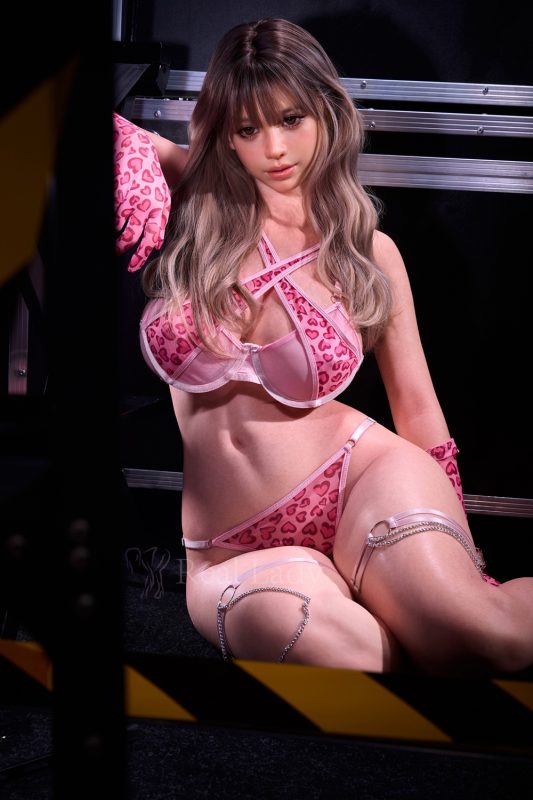






















Zippers tear TPE skin through three mechanisms: metal teeth catching porous material, slider edges cutting during forced pulls, and repeated friction eroding the surface. Prevention is simple — always open the zipper fully before dressing, use a fabric barrier, and never yank. Most minor abrasions stay cosmetic; deep cuts are permanent.
Why Zippers Are One of the Biggest Threats to TPE Dolls
Denim jeans. Leather jackets. Corsets with back closures. Boots with side zippers. They all look stunning on a doll. They all carry the same hidden risk.
TPE is a thermoplastic elastomer — soft, porous, and genuinely skin-like. Those same qualities that make it feel realistic also make it vulnerable. Metal zipper teeth have a hardness that is, mechanically speaking, completely incompatible with TPE’s surface. Drag them across each other under pressure, and the TPE loses.
We’ve documented this failure mode repeatedly across different garment types. Jeans zippers cause the most frequent damage because of their stiffness. Boot zippers cause the deepest cuts because of the leverage involved in pulling them up over the ankle and calf. Jacket zippers are the sneakiest — the zipper pull often scrapes the arm or shoulder during dressing without the owner noticing until the light catches the groove later.
This guide breaks down exactly how each type of zipper causes damage, what the damage looks like at each stage, and what you can do to prevent — and in some cases reverse — it.
How Zipper Damage Actually Happens: The Three Mechanisms
Not all zipper damage is the same. Understanding the mechanism helps you target the right prevention strategy.
Mechanism 1: Teeth snagging on porous TPE
TPE has a microscopically uneven surface — tiny pores and texture variations that catch metal teeth during lateral movement. Even when the zipper is “closed,” running it against TPE skin while pulling the garment into position creates micro-tears. These look like fine white lines or a dull, chalky patch. They don’t bleed, but they don’t disappear either.
Mechanism 2: Slider edge cutting during forced closure
The slider — the metal housing the zipper pull feeds through — has sharp interior edges designed to interlock the teeth. When you force a too-tight garment closed while the slider is pressing against a doll’s skin, those edges act like a blade. This is the mechanism behind the classic “zipper track scar”: a single, straight abrasion running parallel to the garment’s seam.
Mechanism 3: Friction erosion from repeated dressing
Each time you dress and undress the doll, the zipper crosses the same patch of skin. Individually, each pass is harmless. Cumulatively, it thins and roughens the surface. After 20-30 dress cycles, that spot loses its original texture. It doesn’t look torn — it looks worn, like an erasure mark.

Damage Severity Classification
Before you decide on a response, you need to know what you’re dealing with.
| Severity Level | Visual Description | Depth | Reversible? | Action Required |
| Level 1 — Surface Abrasion | Chalky or dull patch, no groove | Epidermis only | Yes (TPE oil) | Mineral oil application |
| Level 2 — Shallow Groove | Visible line, slightly raised edges | 0.5–1 mm | Partially | TPE repair glue + oil |
| Level 3 — Deep Cut | Clear groove with visible interior | 1–2 mm | No | Cosmetic masking only |
| Level 4 — Tear | Separated edges, gap visible | Full depth | No | Structural repair or replacement |
Most zipper damage lands at Level 1 or Level 2. Level 3 and 4 damage typically requires actual force — pulling a zipper closed against significant resistance, or catching the skin in a zip as it snaps shut.
Prevention: The Non-Negotiable Steps
Here’s the deal: prevention is ten times easier than repair. These aren’t optional suggestions — they’re the protocol.
Step 1: Open the zipper completely before dressing
This sounds obvious. People still skip it. If the garment has a side zipper, open it all the way to the bottom stop. If it has a back zipper, open it to where you can lay the garment flat. A half-open zipper during dressing guarantees contact between the teeth and the skin.
Step 2: Use a fabric barrier at the zipper
A strip of thin cotton fabric — cut from an old T-shirt, about 3–5 cm wide — placed between the zipper and the doll’s skin during the dressing process eliminates direct metal-to-TPE contact. Hold it in place with one hand while you guide the garment on. Remove it after the garment is seated and before you zip up.
Step 3: Apply mineral oil to the contact zone first
Mineral oil reduces friction between the garment and the skin. Apply a thin layer with your fingers to the area that will be near the zipper — typically the hip for jeans, the back for dresses, the calf for boots. This doesn’t eliminate the risk, but it dramatically reduces the force required to position the garment.
For full dressing technique context, including how to manage tight-fitting clothing without transferring excess force to any single point, the plastic bag trick for putting clothes on dolls covers the foundational method that pairs well with zipper-adjacent techniques.
Step 4: Never yank a stuck zipper
A stuck zipper on a garment that’s partially on a doll creates enormous mechanical force at a single contact point. Stop. Back the zipper up. Identify what’s caught — usually fabric, but sometimes a TPE fold that got pinched. Release it gently before continuing.
Step 5: Zip slowly and monitor the path
Watch the zipper slider’s path as you close it. The slider should be parallel to the seam at all times. If it starts to angle toward the skin, stop and realign. This matters most for back zippers on corsets and dresses, where you can’t see the closure while it’s happening. Use a mirror, or better, dress the doll on its back on a flat surface with the closure facing up.
For corset-specific risks — where back closures combine with compression forces — the full guide on dressing a doll in a corset safely goes deep on lacing tension and zipper-vs-hook closure tradeoffs.
High-Risk Garment Types: What to Watch For
Jeans and Denim
Fly zippers on jeans are short and stiff, with heavy-duty metal teeth. They carry low absolute risk during zipping, but high risk during the pull-on phase — the zipper is fully exposed and presses against the hip as you guide the jeans up the leg. Always ensure the fly is fully open and folded flat before pulling the jeans up. The denim itself also poses dye transfer risks to TPE, particularly with dark washes — a separate concern covered in detail on preventing dye transfer on TPE skin that you’ll want to address simultaneously.
If you’re dressing tight jeans specifically — the kind that require real effort to pull up past the thighs — the techniques in putting tight jeans on a TPE doll address both the zipper and the mechanical friction of the denim itself.
Boots and Knee-Highs
Side zippers on boots run along the ankle and lower calf — exactly where the TPE is often thinnest and closest to the structural skeleton. The leverage angle when pulling a boot zipper closed is poor: you’re pulling at roughly 45 degrees, which presses the slider against the skin throughout the motion. Solution: use a zipper pull hook tool (or a bent paperclip) to maintain an outward pull angle, keeping the slider away from the skin as it travels.
Corsets and Bodices with Back Zippers
These combine two risk factors: the back zipper and the compression the garment applies after closure. The zipper damage happens during dressing; the compression damage happens during wearing. Address both separately. Get the zipper closed without incident first, then assess whether the compression level is safe for TPE skin over time.
Leather and Pleather Jackets
Jacket zippers are lower-risk during the primary zipper motion but higher-risk in the collar and cuff areas, where secondary zipper pulls for decorative pockets or cuffs can scrape the neck and wrist during dressing. These areas often go unprotected because attention is focused on the main closure.
How to Assess Damage After the Fact
Light is your diagnostic tool. Take the doll to a window or use a bright flashlight at a low angle — roughly 10–20 degrees above the skin surface. This raking light reveals surface texture changes that are invisible under overhead lighting.
Run your fingertip lightly over any suspicious area. Level 1 abrasions feel rougher than the surrounding skin. Level 2 grooves are tactile — you can feel the ridge. Level 3 and 4 damage is unmistakable.
Also check areas you might not have been watching during dressing:
- The outer hip and upper thigh (jeans fly zone)
- The lower back (dress and corset zippers)
- The inner ankle and calf (boot zippers)
- The back of the upper arm (jacket sleeve zippers)
Catching Level 1 damage early means you can treat it before it progresses to Level 2 from repeated friction at the already-thinned surface.
Repair Options by Severity Level
Level 1 — Mineral Oil Restoration
Surface abrasion on TPE often responds to mineral oil. The oil penetrates the porous surface and restores its original translucency, reducing the visual contrast of the chalk-like damaged area.
Protocol:
- Clean the area with warm water (no soap — it dries the surface further)
- Pat dry completely
- Apply a small amount of mineral oil — petroleum jelly also works — and massage in gentle circular motions
- Leave for 4–6 hours
- Wipe off excess and reassess
Repeat up to three times. If the area hasn’t improved after three treatments, it’s likely Level 2 or the abrasion is deeper than surface-level.
Level 2 — TPE Repair Glue + Refinishing
Shallow grooves can be partially filled. TPE-compatible adhesives (often sold as “doll repair glue” or available as heat-weld kits) work by melting and fusing the edges of the groove. The result won’t be invisible — the texture won’t perfectly match — but it stops the groove from expanding and reduces its visual prominence.
Protocol:
- Clean and dry the area thoroughly
- Apply the smallest possible amount of adhesive along the groove, not on top
- Press the edges together gently and hold for 60–90 seconds
- Allow 24 hours full cure before handling
- Apply mineral oil to the area after cure
The key mistake is using too much adhesive, which creates a raised scar instead of a smooth closure.
Level 3 and 4 — Cosmetic Management
Deep cuts and tears cannot be fully reversed. The structural integrity of the TPE in that zone is compromised. Options:
- Positional masking: Position the doll so clothing covers the damaged area during display or photography
- Matching pigment: Some TPE repair kits include pigment that can be mixed to approximate the surrounding skin tone and painted over the repair area
- Professional repair: A small number of doll restoration specialists offer micro-welding techniques for significant tear repair — results vary significantly
If the damage is near a joint or high-flex area (inner knee, elbow fold), even cosmetic repair has a short lifespan because repeated flexion reopens the repair.
Storage Considerations After Zipper Damage
Any area with existing zipper damage becomes a preferential failure point under pressure. Don’t let tight clothing remain on the doll for extended periods near a repaired or damaged zone — the compression accelerates any incomplete repair.
For general storage posture and how it affects skin integrity, especially if you’re storing a dressed doll, the guide on how to store a doll without flattening the butt addresses storage posture principles that apply here. Avoid positions where the damaged zone bears the doll’s weight or is compressed against a surface.
The Long-Term Dressing Protocol
If you’re regularly dressing and undressing your doll, establish a rotation. Don’t put the same zipper garment on and off repeatedly — the cumulative friction model means even perfect technique builds up surface wear. Alternate between zipper garments and pull-on garments. Let TPE oil recovery happen between high-friction sessions.
Additionally, track which zones have received the most zipper contact over time. The hip, lower back, and calf are the most common accumulation zones. Oil them proactively on a regular schedule — not just after visible damage.
For broader skin care context that connects zipper damage prevention to overall TPE maintenance, how to dress a doll without tearing the skin addresses the full spectrum of mechanical dressing risks, of which zippers are one category.
Frequently Asked Questions
Q: Can a zipper scratch leave a permanent white mark on TPE?
A: Yes — if the abrasion went deep enough to disrupt the internal structure of the TPE, not just the surface. Light chalky marks from surface friction usually respond to mineral oil. But if you can feel a groove with your fingertip, that structural damage is there to stay. You can reduce its visibility, not eliminate it.
Q: My doll’s jeans have a metal zipper and rivets. Are the rivets a separate risk?
A: Honestly, yes. Metal rivets at stress points — especially the inner thigh and side seam — can indent TPE during prolonged wear. They’re lower risk than zippers during dressing but higher risk during static wear. Put a fabric patch behind any rivet that contacts the skin if the doll is wearing the jeans for more than a day or two.
Is there any zipper type that’s safer for TPE dolls?
A: Plastic or nylon coil zippers are meaningfully safer than metal toothed zippers. The teeth are softer and less abrasive. If you have the option — say, when custom-ordering garments or shopping specifically for doll clothes — plastic zippers are the better choice. Invisible zippers (the kind used in formal wear) are also lower-risk because the teeth fold underneath when closed, reducing exposed metal near the skin.
Q: I accidentally zipped the doll’s skin into the zipper. What do I do? I accidentally zipped the doll’s skin into the zipper. What do I do?
A: Don’t pull. Reverse the zipper slowly back to where it caught. If the TPE is bunched into the teeth, work it free gently with your fingers. Pulling forward will tear. Pulling backward creates a controlled release. After freeing it, assess for Level 2+ damage before trying to continue dressing.
Q: Does mineral oil help prevent zipper damage, or just treat it?
A: Both. Applied before dressing, it reduces friction between the zipper and the skin during the dressing process — that’s prevention. Applied after abrasion, it aids surface recovery — that’s treatment. Make it a standard pre-dressing step for any garment with a zipper near skin contact zones.